
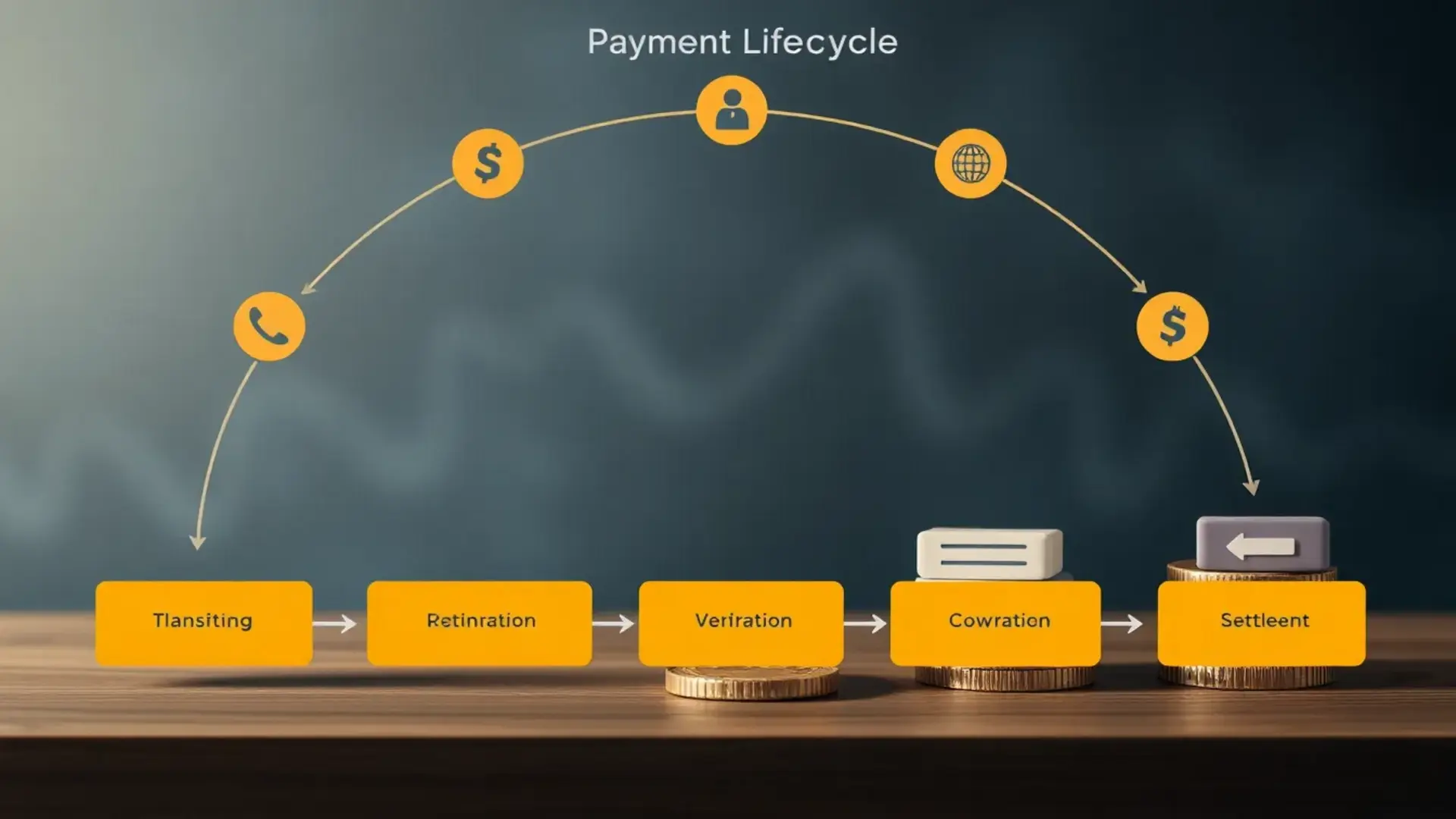
Overview of the payment lifecycle
The payment lifecycle is a critical process in modern commerce, encompassing each step involved in a transaction, from initiation to final settlement. By understanding this cycle, businesses can enhance payment efficiency, security, and customer experience. As digital transactions continue to rise, companies must stay updated on the payment lifecycle to streamline operations and comply with evolving security regulations. Each stage of the payment lifecycle plays a vital role in ensuring secure and efficient transactions, making this knowledge indispensable for businesses across industries.
Defining the payment lifecycle
The payment lifecycle represents the journey a transaction takes, beginning with a customer’s purchase and ending when funds reach the merchant’s account. It includes several key stages, such as authorisation, verification, clearing, and settlement, each of which is vital for maintaining transaction accuracy and security. Understanding these stages helps businesses gain insight into their transaction processes, allowing them to make data-driven decisions and address challenges more effectively.
Importance of understanding each stage
Each stage of the payment lifecycle serves a unique function, from confirming customer details to settling funds into the merchant’s account. By comprehensively understanding these steps, businesses can identify where errors or delays might occur and take proactive measures to optimise the process. Additionally, this understanding enhances a company’s ability to respond quickly to potential security threats, improving overall transaction security and efficiency.
Initiating the payment lifecycle
The lifecycle begins when a customer initiates a payment, whether online, in-store, or via mobile. This first step involves capturing the customer’s payment details and transmitting them to the relevant payment processor. The initiation stage sets the foundation for the rest of the lifecycle, as it gathers essential information that will be verified and processed in subsequent steps.
Authorisation request from the merchant
After the payment initiation, the merchant sends an authorisation request to the customer’s issuing bank. This request checks whether the customer’s available funds or credit are sufficient for the transaction. The issuing bank evaluates the customer’s account and either approves or declines the request, depending on their available balance and account status. This step is crucial, as it prevents unauthorised or insufficiently funded transactions from proceeding.
Customer verification process in payment lifecycle
Verification plays a central role in the payment lifecycle, particularly in online transactions where additional fraud prevention is necessary. During this stage, the customer’s identity is confirmed using various security measures, such as two-factor authentication (2FA), biometrics, or verification codes. This step adds an extra layer of security, ensuring that only authorised individuals can complete transactions.
Payment authorisation in the lifecycle
Following successful verification, the transaction is sent for final authorisation. During this process, the payment processor confirms that the customer’s funds are available and places a hold on the specified amount, effectively “reserving” the funds until the transaction is settled. Authorisation ensures that both the customer and the merchant are protected, as it confirms the availability of funds before finalising the purchase.
Role of payment gateways and processors
Payment gateways and processors act as intermediaries between the customer, merchant, and financial institutions. The payment gateway securely transmits customer payment details to the payment processor, who then coordinates with the issuing bank to facilitate the transaction. These entities are essential for ensuring transaction data is transmitted securely and processed accurately.
Verification checks for payment security
Verification checks are essential in preventing fraud and ensuring transaction security. By cross-referencing customer information with payment details, these checks validate the transaction’s legitimacy before it proceeds to the next stage. Many businesses implement automated verification systems that reduce the likelihood of human error, helping maintain security without slowing down transaction speed.
Decline reasons and next steps
In some cases, a transaction may be declined during the verification or authorisation process. Common reasons include insufficient funds, suspected fraud, or network errors. When a decline occurs, the customer and merchant are notified, and the transaction is cancelled. In cases of alleged fraud, additional steps may be taken to secure the customer’s account and investigate the transaction.
Clearing process in the payment lifecycle
Once a transaction is authorised, it moves into the clearing phase, where payment details are further verified, and the transaction is prepared for settlement. This step involves validating the transaction amount, currency, and other essential details, ensuring that all information is correct before funds are transferred. The clearing is a vital part of the process, as any discrepancies here could lead to errors in the settlement phase.
How transactions are processed for settlement
Settlement, the final stage of a transaction, involves the transfer of authorised funds from the issuing bank to the acquiring bank. Subsequently, these funds are deposited into the merchant’s account. The timeframe for settlement typically ranges from one to three business days, contingent on the specific payment method and the banking networks involved.
Clearing timeline for card and digital payments
The timeline for clearing transactions varies based on the payment type. For card payments, clearing generally takes one to two days, while digital payments can sometimes be processed within a few hours. Factors such as the payment processor’s policies and the financial institutions involved can also impact the clearing timeline.
Settlement phase of the payment lifecycle
The settlement phase is the final step in the payment lifecycle, where funds are officially transferred to the merchant’s account. During this phase, any outstanding fees or charges are deducted, and the remaining amount is deposited. This phase concludes the transaction, ensuring the merchant receives payment for their goods or services.
Distribution of funds to merchant accounts
Once settlement is complete, the acquiring bank distributes the funds to the merchant’s account. This step involves transferring the final amount, minus any processing fees or service charges, ensuring that the merchant receives the agreed-upon payment for their transaction.
Bank reconciliation and settlement reports
Following the distribution of funds, businesses must reconcile their bank accounts to confirm that each transaction is accurately reflected. Settlement reports provided by payment processors are essential for this task, as they offer a detailed breakdown of all completed transactions. Reconciliation helps businesses identify any discrepancies and ensures accurate financial records.
Disputes and chargebacks in the payment lifecycle
Disputes and chargebacks are an unfortunate but common part of the payment lifecycle. Chargebacks occur when a customer disputes a transaction, often due to unauthorised charges or dissatisfaction with the product or service. When a chargeback is initiated, the funds are temporarily withdrawn from the merchant’s account while the dispute is investigated.
Understanding chargeback requests
A chargeback request signals that a customer has questioned the validity of a transaction. This process is designed to protect customers from fraud, but it can also result in lost revenue for merchants. Understanding the chargeback process allows businesses to respond promptly and provide the necessary evidence to resolve disputes.
Managing customer disputes efficiently
Efficiently managing customer disputes is essential for maintaining customer satisfaction and avoiding costly chargebacks. To prevent conflicts from escalating into chargebacks, businesses should establish clear policies for handling these situations, ensuring that customer concerns are addressed promptly and professionally. Proactive communication is crucial in resolving disputes effectively.
Chargeback prevention and resolution strategies
To reduce chargebacks, businesses can implement preventive measures such as transparent transaction policies, clear product descriptions, and responsive customer service. For disputes that do arise, providing thorough documentation and prompt responses can help resolve chargebacks in the merchant’s favour.
Security measures across the payment lifecycle
Security is paramount throughout the payment lifecycle, with measures such as encryption, tokenisation, and compliance with industry standards helping protect customer data. Implementing robust security protocols ensures that sensitive information remains secure at every stage, reducing the risk of fraud.
Fraud detection tools and techniques
Fraud detection tools are critical for identifying suspicious activity within the payment lifecycle. Businesses can proactively identify potential threats and take swift action to prevent fraudulent transactions by utilising advanced techniques such as machine learning, behavioural analysis, and IP monitoring.
Compliance with PCI DSS standards
The Payment Card Industry Data Security Standard (PCI DSS) is a set of guidelines designed to protect cardholder data. Compliance with PCI DSS is mandatory for businesses that handle card transactions, and following these standards helps ensure that payment systems are secure and customer data is protected.
Data encryption and secure transmission
Data encryption and secure transmission protocols are essential for protecting payment information during processing. Encryption converts data into unreadable code, ensuring that even if data is intercepted, it remains safe. Secure transmission protocols prevent unauthorised access to payment information as it moves between systems.
Tracking and reporting in the payment lifecycle
Tracking and reporting are vital for monitoring transaction efficiency and identifying potential issues. Real-time tracking provides businesses with immediate insight into transaction statuses, while detailed reports help analyse patterns, ensuring transparency and accuracy in financial records.
Real-time transaction monitoring
Real-time transaction monitoring enables businesses to track transactions as they occur, allowing for swift responses to any irregularities. This approach is precious for detecting fraud, as it will enable firms to intervene before fraudulent transactions are completed.
Generating payment reports and analytics
Payment reports and analytics provide businesses with a detailed overview of their transaction activity, helping them assess performance and identify areas for improvement. These insights are invaluable for strategic planning, allowing enterprises to optimise payment processes and enhance operational efficiency.
Critical metrics for optimising payment efficiency
Optimising payment efficiency involves tracking key metrics such as transaction speed, authorisation rates, and chargeback frequency. By analysing these metrics, businesses can identify areas where improvements can be made, ensuring a smoother and more effective payment process.
Evolving trends in the payment lifecycle
The payment lifecycle is continuously evolving, with new technologies and consumer preferences shaping the process. Emerging trends such as mobile wallets, AI-driven fraud detection, and regulatory changes are transforming how businesses handle payments, making it essential to stay informed about these developments.
Digital wallets and contactless payments
Digital wallets and contactless payments are becoming increasingly popular, offering a convenient alternative to traditional payment methods. By incorporating digital wallets and contactless payment options, businesses can cater to modern consumer preferences, providing a faster and more convenient checkout experience. These technologies not only enhance customer satisfaction but also improve transaction speed, making them an essential trend in the evolving payment lifecycle.
Role of AI and machine learning in payments
Artificial intelligence (AI) and machine learning (ML) are transforming the payment lifecycle by providing advanced tools for fraud detection, data analysis, and personalised customer experiences. AI-powered algorithms can quickly analyse transaction patterns, identify anomalies, and detect potential fraud, which is crucial for maintaining security. Additionally, AI and ML help businesses tailor their payment processes to customer behaviour, creating a more seamless and engaging experience.
Adapting to regulatory changes in the payment ecosystem
The payment industry’s ongoing evolution necessitates businesses to adapt to new regulatory requirements. To avoid penalties and maintain customer trust, compliance with regulations like GDPR (data protection) and PSD2 (strong customer authentication) is crucial. Staying informed about these changes ensures that companies can align their processes with legal requirements, fostering a secure and compliant payment ecosystem.
Best practices for optimising the payment lifecycle
To optimise the payment lifecycle, businesses should focus on critical areas such as security, efficiency, and customer experience. Implementing advanced fraud detection tools, maintaining PCI DSS compliance, and investing in real-time monitoring are essential for enhancing payment security. Additionally, businesses can improve efficiency by streamlining their payment processes and offering diverse payment options that cater to customer preferences.
Streamlining payment processes for faster settlements
Streamlining payment processes is critical to achieving faster settlements, which in turn improves cash flow and customer satisfaction. Businesses can achieve this by automating routine tasks, ensuring system compatibility, and working with reliable payment processors that offer quick settlement timelines. Faster settlements benefit both companies and customers, creating a more efficient and satisfying transaction experience.
Enhancing customer experience in payments
Customer experience is a significant factor in the payment lifecycle, as a seamless and convenient transaction process can enhance satisfaction and loyalty. To improve the payment experience, businesses should offer multiple payment options, ensure fast processing times, and maintain transparency in transaction policies. Additionally, providing responsive customer support for any payment-related issues can help prevent disputes and improve overall satisfaction.
Continuous monitoring and improvement
The payment lifecycle is not static, and continuous monitoring and improvement are necessary to keep up with changing technologies and customer expectations. Regularly evaluating transaction data, identifying areas for enhancement, and staying informed about industry advancements allow businesses to maintain an efficient, secure, and customer-friendly payment process. This proactive approach ensures that the payment lifecycle remains optimised and aligned with both business and consumer needs.
FAQs
What are the main stages of the payment lifecycle?
The payment lifecycle includes stages such as initiation, authorisation, verification, clearing, and settlement. Each stage plays a critical role in ensuring a secure and accurate transaction process.
How does a payment gateway differ from a payment processor?
A payment gateway securely transmits customer payment information to the payment processor while the processor coordinates with financial institutions to authorise and complete the transaction. Both work together to enable secure transactions.
What is the role of PCI DSS compliance in the payment lifecycle?
PCI DSS compliance sets security standards for handling card transactions, helping businesses protect customer data throughout the payment lifecycle. Upholding compliance is crucial to preserving trust and preventing penalties.
How can businesses reduce chargebacks in the payment lifecycle?
Businesses can reduce chargebacks by implementing clear transaction policies, transparent product descriptions, and prompt customer support. Additionally, providing thorough documentation in case of disputes can help resolve chargebacks.
Why is real-time transaction monitoring critical?
Real-time monitoring allows businesses to detect and respond to irregularities immediately, helping prevent fraud and ensure secure transactions. This proactive approach is vital for maintaining payment security.